Monday, 30 January 2012

Evaluation - Question 1


In what ways does your media product use, develop or challenge forms and conventions of real media products?

After doing research and work I have done in class, here are some conventions used in film openings:
  • Company Logo
  • An introduction to the main characters (Protagonist/Antagonist) 
  • Opening titles/credits
  • Enigma - Leaving a question unanswered for the audience
  • Music - Used to create different moods depending on the genre
  • An establishing shot, introducing the audience to the current location
  • Give the audience time and date of the film (Using denotations)

Different conventions are used depending on the type of genre the film is. For example the conventions of a Comedy film opening would be different to the conventions of a Murder Mystery film opening. Here is a list of the conventions usually found in our type of genre (Murder Mystery):
  • The editing is generally fast-paced, to keep the audience along with the action
  • The opening leaves enigma
  • The murders generally takes place at night
  • The identity of the murderers are kept until later on in the film
  • The detectives are intelligent, and always take charge

In terms of using, developing or challenging the genre conventions, we have mainly used them. Our reasoning for doing this was if we used the conventions from professional films, ours will look more realistic and believable. We also wanted to give the typical Murder/Mystery audience what they want and expect from this type of genre. We have integrated the titles/credits into the opening, we have done this for fluency and to cause minimum disruption. We also filmed our opening at night, which keeps to the conventions of most films of our genre. However we did challenge the conventions of the murder actually shown at night. The audience doesn't see the murder, only the targets and the hearing of the gunshots.  


Editing
Again, with the conventions of a Murder Mystery film, the editing is fast paced, generally with an atmospheric music to create suspense and enigma. For example the TV Drama Sherlock Holmes - BBC1 has fast paced editing and music during important chases/action.


This video applies for both Editing and Sound

In the above video, very fast cuts/editing have been used, as well as a background music to create enigma. However in our 2 Minute Opening, we challenged this convention and used slower editing. I believe that with slower editing and slower cuts/fades, it creates a lot more suspense and enigma.


Sound
In Sherlock Holmes, orchestral music is used to create suspense relating to the mood. We have also used music to try and create the same effect, using the convention.


Props
In our 2 Minute Film Opening, the prominent prop used was the sniper rifle. The idea of the sniper rifle came from the film 'Shooter'. The conventions in 'Shooter' show the person holding the sniper rifle, whilst an establishing shot is being used. We used this convention to make our video as realistic as possible.


Shooter

In our 2 Minute Film Opening


Characters
During our 2 Munite Opening, the main character that is seen is the Antagonisht - The sniper. This is using the conventions of real media products by introducting the main characters within the first 2 minutes.


Costume
As our genre is Murder/Mystery, we took the idea of clothing from the BBC 1 Drama - Sherlock Holmes. As seen, in the Drama, Sherlock is wearing a long, dark coat, making him secretive and mysterious. We also wanted to achieve this by giving the 2 mysterious people dark clothing.

Sherlock Holmes - BBC 1

Our 2 Minute Opening
However we also got clothing ideas from the film Inception (2010), and Action/Mystery. The clothing in Inception is smart dress, like you would see at a formal dinner. We developed this convention by making our actors slightly less formal.

Inception (2010)
Pink Panther (2006) is a Adventure/Comedy/Crime/Mystery. In Pink Panther, they are also smartly dressed, showing the convention is being used in many different films of this genre.


Pink Panther (2006)
Location
Still going along with the Sherlock Holmes idea, we set our location on a street and filmed it at night. The murder actually happens at night, using the conventions of a Murder/Mystery. It also help to add suspence and enigma.

Mise-en-Scene

Costume - Long shady/dark clothing, this keeps the characters identity and doesn't reveal much about the characters. This crates enigma.
Lighting - Low-key lighting is used, natural light whislt filming at night. Dark lighting reveals as little as possible.
Actors - The actors do not speak much so we didn't have any mishaps with wording. The only dialogue was the (Chief of Police) at the beginning to tell the viewer what has happened.
Make-up - No make-up was used in our 2 Minute Opening. This is to give a natural feel to the film opening. It would not make alot of difference because the majority was filmed at nigh.
Props - We used a immitation L96A1 Sniper Rifle as the main prop. This confirms that there will be a murder within the first 2 minutes.
Setting - The setting is a dark back ally with little lighting and a dark warehouse. This is to give the viewer a feeling of becoming tense.

In conclusion, we mainly used conventions of this genre, this was to make our 2 Minute Opening realistic and believable. However we did develop and challenge some conventions because we thought it went better with our ideas and to make it original. For example we challenged the convention of fast editing, we used slower editing because we thought it created more suspense. We also developed the convention of the formal dress in Inception, by making the clothing in our film a little less formal. 

Evaluation - Question 2

How does your media product represent particular social groups?


Our film represented particular social groups by:

Gender
All of the characters in our film are male, the only female seen is where she is in the audience for the Chief of Police briefing about the murders. The main reason why we had all of the characters male was because stereo-typically we thought the male gender fitted more with the violence taking place, and stereo-typically that males are more likely to be seen as head positions (Chief of Police) within a job. We also looked into big detective films and used the conventions, and any female actors within the film are not seen to be the main character, the detectives are mainly male (Sherlock Holmes and Dr. Watson).

Age
Within our film there is a variety of age portrayed between the characters. For the Chief of Police we purposely chose an older male (50+), this connotes that he has experience in his field, and he is a respected member within his society. The killer is seen to be alot younger (16-18), fitting with the stereotype that youngsters are 'youths' and are always up to no good, looking at violence to solve the situation. The two mysterious people who met and exchanged the package are seen as mid-males (25+), giving a big age difference between the characters.


Physical Ability 
In terms of Physical Ability, we didn't have any actors within our film who are shown to have any physical disorder. We did not believe that it fitted in with our genre and we didn't think someone with a physical disability needed to be in our film.

Sexuality
All of that actors within our film are portrayed as heterosexual. Stereo-typically, we didn't think that someone with a homosexual nature would fit in with our genre and the violence committed within our film.

Ethnicity
All of the characters/actors in our production are While-British. We didn't base any of the characters on a certain ethnicity, which made it alot easier to find actors, which are all White-British. Due to all of the characters in the film being White-British, it tell the audience that or film is a British Production and takes place in in the UK. 


Evaluation - Question 3

What kind of media institution might describe your media product and why?


What is a Film Distributor?
A film distributor is a company or individual responsible for releasing films to the public either theatrically or for home viewing. Formats that a film distributor may be responsible for could include DVD/Blu-Ray, Downloading (iTunes, Zune), Video-On-Demand (BBC iPlayer, 4oD)

There are 2 different types of Film Distributors: Major Distributors and Independent Distributors.
  • Major Distributors - Very big, well know companies (E.g. Universal, 20th Century Fox, Paramount)
  • Independent Distributors - Much smaller, less well-known companies (E.g. Pathe, Lionsgate)

I think that our film would benefit more from an Independent Distributor. Major Distributors only really concentrate on big budget films, however Independent Distributors are very good at distributing low budget films and receiving very high profits.  

An example of a low budget film which were distributed by an Independent Distributor (Lionsgate) would be Saw (2003). Budgeted at £1,200,000 and gone onto having gross profits of £103,000,000 and continuing on to produce 6 sequels. 

If Lionsgate were to distribute our film, we would expect it to be available to mass audiences, featuring in multiplex cinemas like Odeon and Parkway, and being made on DVD's and Blu-Rays. 

Marketing
In terms of how we would market our film, I would recommend mainly online, websites like Facebook and YouTube, where masses of people can see it. Also places like Television, newspapers, film magazines and various other forms of media.

Evaluation - Question 4

Who would be the audience for your media product?


For help on looking what our audience would actually be for our film, we looked on the UK Film Council website. Here we found the out genre of film (Murder/Mystery) is most appealing to both females and males over the age of 35. (See below)

Graph showing our audience would be Middle class (C2) male and female, 35+ 


However, after getting these statistics, we still wanted our target audience to be both younger males and females (15+), any class and any ethnicity. Our reasoning for this is as a group, we feel we would be able to relate more to the younger market to satisfy the wants of our target audience.

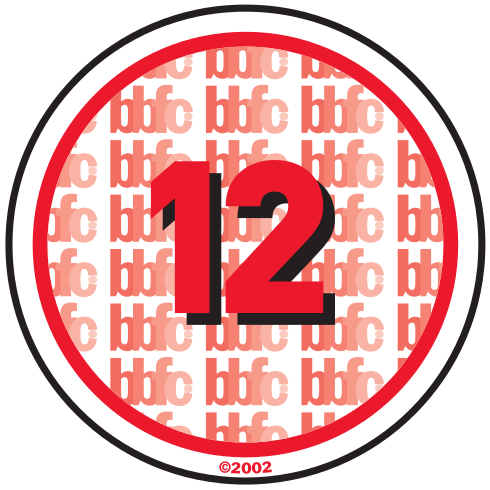
In terms of the classification of our film, we did research looking at the BBFC (British Board of Film Classification). We compared our film to other films that share the same genre such as Sherlock Holmes (Rated 12), The Fugitive (Rated 12), Dial M for Murder (Rated 15) and Mystic River (Rated 15).

We looked into why these films were the classification they are. It is all based on the level of offensive language, nudity, violence, horror, gore and influential characters/acts etc. featured in the film. Comparing our film to the guidelines of the BBFC, we came to the conclusion that our film will be Rated 12. Our film doesn't graphically show any of the above, not showing the intensity of the action or violence.  

Our film rating

In terns of where I think our film should be released, I believe that big multiplex cinema's would be ideal. If we find a good film distributor that specialise in distributing low budget films, then our film can be very successful, making a big profit. This targets a mainstream audience in masses, which would be more ideal than a smaller, more specific niche market. 


Target Audience Member Profile:


Name: Jordan Chilvers
Age: 17
Class: C2
Ethnicity: White - British
Occupation: At De-Aston Academy studying for A-Levels (Not doing Media Studies)
Interests: Sports, Socialising, Gaming.
Reaction to our 2 Minute Opening: After Jordan watched our opening, he wanted to see more of the film. He especially liked the action/mystery, and thought the editing was very good, creating enigma and suspense. For us, this is what we wanted to hear from our target audience sample. It tells us that our production is favoured by our target market, and we have been successful on doing this.

Evaluation - Question 5

How did you attract/address your audience?

My group attracted/addressed our audience by various different forms. The very first thing we did was look at the statics on the UK Film Council, giving us a rough idea what social groups/ages would be more attracted to our chosen genre.


After studing the UK Film Council's research, our target market for our film should be teenage males and middle-aged females.

After knowing this, we went out and asked questions to a sample from our target market. We interviewed both a teenage male (Jordan Chilvers) and a middle-aged female (School English Teacher).


The questions we asked included:
  1. What is your favourite genre of film? (This gave us an idea of what types of films they enjoy)
  2. How old are you? (Telling us whether different ages prefered different Genres)
  3. What gender were they? (Seeing if certin genders liked different Genres)
  4.  Would you like to see a film involving: Action, Mystery and Implied Violence? (Seeing if the audience would be attracted to our film)
The results from the interviews gave some interesting answers. The middle-aged female we interviewed didn't really like the concept of our film. Asking why, she stated that she doesn't like to see violence in films, and she prefers the genre Comedy to an Action/Mystery. However, the male teenager we interviewed really took to our genre and plot for our film. After showing him the 2 Minute Opening, his reaction signified he enjoyed it, and he wanted to see more of the film.

In terms of promoting our film, we faced many different option of how we could do it, the main ways we though of advertising/promoting our film would be:
  • Producing a trailor of the film for public viewing before the film is released in the cinema
  • Advertiment through the internet, using popular sites such as Facebook and YouTube, and various other sites.
  • Poster/Billboards (On the side of buses for the public to see)
  • Articles in magazenes (Mainly film and media magazines)
I personally think the best way to advertise/promote our film would be through the Internet. As the population becomes more viral, more and more people are using the Internet on a day-to-day basis, using massive websites such as Facebook, Twitter and YouTube. If we were to advrtise our film on the internet, it would be available for masses of the public to whitness.    
Currently, there are over 750 million active users on Facebook alone!

Evaluation - Question 6

What have you learnt about the technologies from the process of constructing this product?


During the three stages of our Production (Planning/Research, Construction and Evaluation, we used many different types of technology to assist us the the Production.

For the Planning/Research, we mainly used the Apple Mac's, using them to look on the internet and mainly using sites like Google, Blogger and YouTube.
As mentioned, we did use Apple Mac's throughout the Production. Before the course I had no experience with Mac's, however the school ones run with Windows XP, instead of the normal Mac OS, so this wasn't a problem using them.


With using Google and YouTube, that wasn't  problem for anyone because we tend to use them on a day-to-day basis anyway. Blogger was a new experience for most people, however due to it's usability, everyone soon picked up how to function it.

For the Construction, we used both Digital Recording Camcorders and mics, to capture both visual and audio. We also used a still capturing camera to capture still photographs. We used these as photographic evidence.

As well as using the mics for recording audio, we also used a sound booth. We used this to record the Emergency phone calls at the end of our 2 Minute Opening. After we had both the footage and audio recoding's, we used Adobe Premier Pro CS3, Audio Audition and Particle Illusion. We used this software to edit, construct and produce out Film Opening.


The only main technical aspect we clashed with was the lighting when we were filming the sniper scene. As this was filmed at night, we had to find some source of light to reveal the actor and the sniper rifle. As there were not any plug sockets, in which we could plug a generator into, we used numerous brightly powered torches, and secured them into a '3 Point Lighting' affect.


Evaluation - Question 7

Looking back at your Preliminary Task, what do you feel you have learnt in the progression from it to the full product?


When we started the course for AS Media, we were introduced straight away into the Preliminary Task. This help us get use to the Apple Macs, the filming equipment and the editing software.

The Preliminary Task involved working in a group of three, two would be acting and one would be filming. One of the actors walked down a corridor, while being followed by the camera. They would open a door and go into a room, where the second actor was already sat down at a table. They would sit with them and exchange a few lines of dialogue, and then get up and leave the room.

Before doing the Preliminary Task, we spent a week or so learning about the camera techniques and rules we had to follow when filming any sequence. They are Shot/Reverse Shot, Match-on-Action and the 180 Rule.

Shot/Reverse Shot
Shot/Reverse Shot is a method used to show two people having a conversation. It includes a shot of one character looking one way, and then another shot of the other character looking back at the first character to give the impression that the two characters are having a conversation.

Match-on-Action
This is the term for making sure when using two different shots to illustrate an action that when the first shot cuts to the second, the action matches. For example, when filming our Preliminary Task, we did a Long Shot of the person going to open the door but then an Extreme Close-Up when he actually opens it. When the shot cuts from the Long Shot into the Extreme Close-Up, we had to ensure that the persons hand was the same distance from the door handle.


180 Rule
The 180 Rule is basically where the characters on the screen have the same left/right relation to the camera throughout. If the camera operator moves over this 180 line, it's known as 'Crossing the Line'. It's done to ensure you don't give the audience a false perspective of which way the characters on screen are actually facing.


All of these rules helped during the production of our 2 Minute Film Opening. If we didn't use these rules, then the film would not have continuity, something it has to have if it's to be a successful film.


In the Research and Planning of the Preliminary Task, there wasn't much we could do for the Research part. However in the Planning process, we did plan the whole task out using storyboards, which we also did the same for our Film Opening.

The Construction of both the Preliminary Task and the Film opening were very similar. We used the same technology like the recording cameras and the Apple Macs, and we also used the same software to edit which was Adobe Premiere Pro. The only main difference with the Construction was the size of each project, with the Film Opening we had alot more to Plan, Film and Edit.

The Evaluation process was that which changed the most. The Evaluation of our Preliminary Tasks were to write up some Good/Bad points and how to improve it. With our Film Opening, the Evaluation consisted of mainly 7 different questions that had to be answered in depth, however also things like feedback from the group.

Overall I do think that the skills I needed to complete the Film Opening I advanced from being taught them while doing the Preliminary Task. Such as operating the camera and sound equipment, using the editing software and basic shots learnt in theory based lessons.

Our Final Production Logo

After many different ideas and concepts of Production Logo's, we finally agreed on one we all like.

Originally we thought of Secret Productions, however we didn't think it went with the film and we wanted it to be more memorable, so the audience would remember it.


Secret Productions

Out main objective was to make our Production name/logo stick in the minds of the audience. From this we came up with 'WKL Productions' (Will-Kane-Lewis). We though this was a much better name.

However someone outside of our group came up with the following Logo. We really liked the idea of it, however we still didn't think it fitted with the genre of our film and we really wanted some sort of animation.

WKL Productions - No. 1

After agreeing on the name 'WKL Productions', we then wanted a completely new logo, however with added animation. we then used the program ParticleIllusion 3.0. Using this program we came up with our final Production Logo, 'WKL Productions'.

Micro and Macro Elements

The Micro Elements in our Production all help to add up to the overall Macro affect For example The Micro Elements (Lighting, Sound, Mise-en-Scene) all help to create the overall Macro affect. All of the Micro Elements in our 2 Minute Opening are all designed to establish a sense of suspense and enigma, fitting in with our Genre (Murder/Mystery). By doing this, we used natural, Low-Key lighting to create an anonymous, mysterious scene. We also added a slow, eerie music to create further suspense and anxiety for the audience.

Movie Production Introduction Logo's


During our research into what Production Logo we are going to do, I found a video of loads of different types of Production Logo's that big companies use today. This video gave us a lot of ideas, what styles to use, the transitions, editing, colours and sound. From this research, it will help us design and put together a good Production Logo.

Wednesday, 18 January 2012

Filming the night Scene

During the filming of the Night Scene, we took some pictures as evidence. They are all shown below:

Lewis Arcing around the 2 suspects during the Exchange

Long Shot of the Exchange

The Sniper's in position

Camera Arcing around the Sniper, giving a 180 degree look

Sniper aiming on the suspects

Camera looking down the barrel 

Camera looking down the barrel

The Exchange

Mid-Shot on the Exchange
Filming suspect 1 walking to the meeting point

Overview of the Sniper and the Exchange


Monday, 16 January 2012

General Feedback from our class


Last week we showed our class an unfinished copy of our 2 Minute Film Opening. We got feedback from the class and we noted down what needed to be improved. These are what they said:
  • Too many Transitions (this is making the whole shot fade in and out when not wanted)
  • Cut shots (it was said that some shots were too long and needed to be cut so it made more sense)
  • Sound clean up (the sound in some places needed cleaning up E.G background noise and speech)

To address these issues we have changed some transitions and made a new sequence of cut up shots so it makes sense. We are also needing to do some detailed sound editing to make it sound as clear as it is needed to be.

Friday, 13 January 2012

Location pictures for the Night Scene

We have chosen an area in which we are going to film the night scene. It fits very well to our specification and we thing is the best possible place.

Here are some pictures of the location in daylight:

This is a shot of where the sniper would lay, pointing his rifle out of the door

Inside shot of the killers sniping point

Inside the building


These pictures are of the interier/exteria of the wareouse, this is where the sniper scene will be shot. For safety reason, we will set up the lighting/filming equipment whilst it is light, and film when it gets dark.


We set up the torches like this and we used different torches to create multipule affects. We went off the diagram below (Standard 3 Point Lighting) to try and get the best possible outcome from our lighting.


Blurb

For our film we needed to write up a Blurb, this is what we came up with:

A physiological thriller which will intense you with mystery into the mindset of an ex-centric killer. In a quite district, Detective mason (actors name) hunts down a cunning assassin to prevent the potential death of himself.

Tuesday, 10 January 2012

Editing - Print Screens

After we had filmed, we needed to edit all of our work. This would make the transitions smoother and the overall film quality alot better.

Here are some pictures when we edited the 'Press Room' scene:

This picture shows the finished look of the Press Scene. As well as adding the other things, we added the 'Live' and the 'Scotland Yard' in the top left corner to add realism

This is showing the sound recording of the crowd in the background

Here the names of our group have been added in the top right hand corner
This is when we added the 'Breaking News' in the bottom left hand corner

Here we added the scrolling text along the bottom, it would tell the viewer about the news